

DESCRIPTION

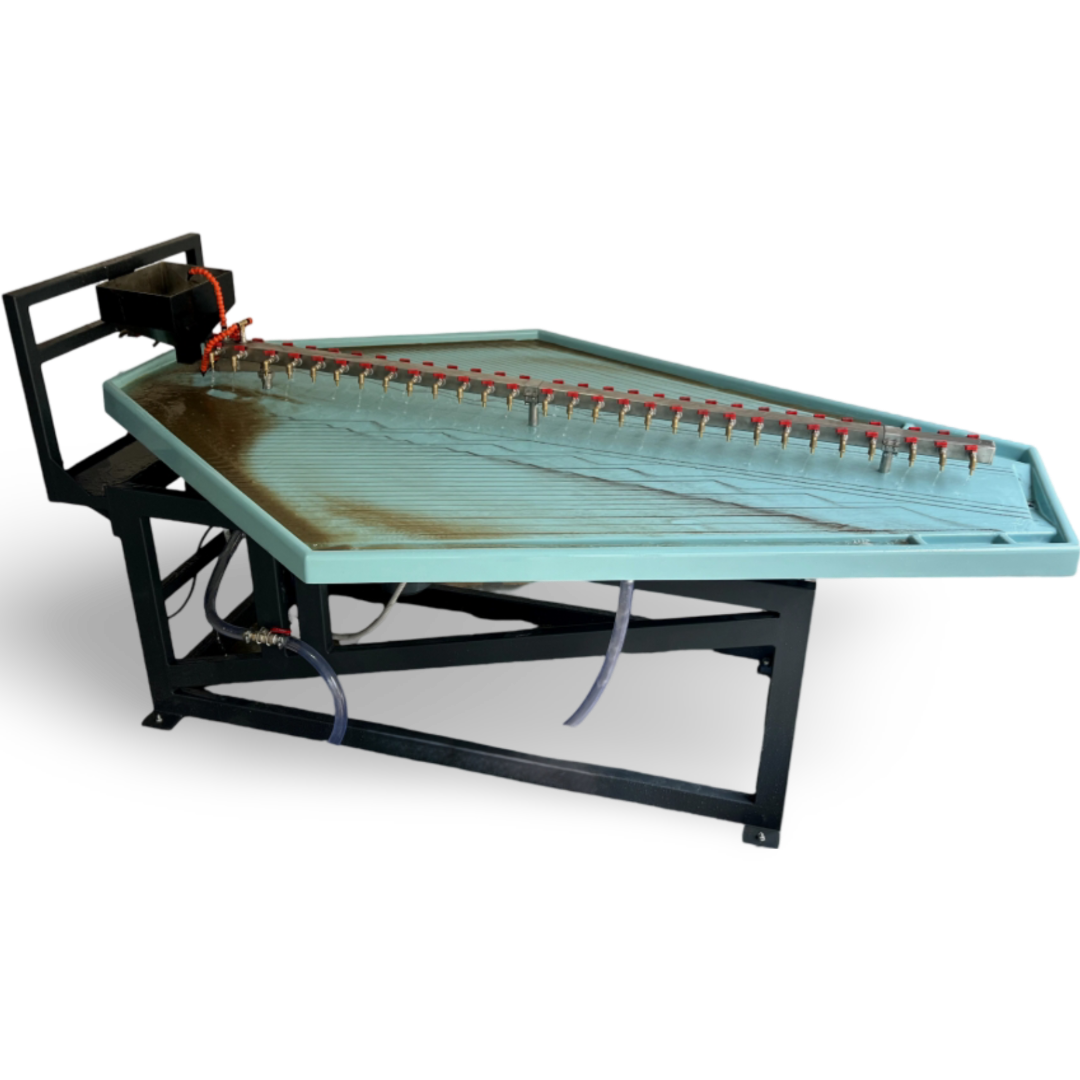
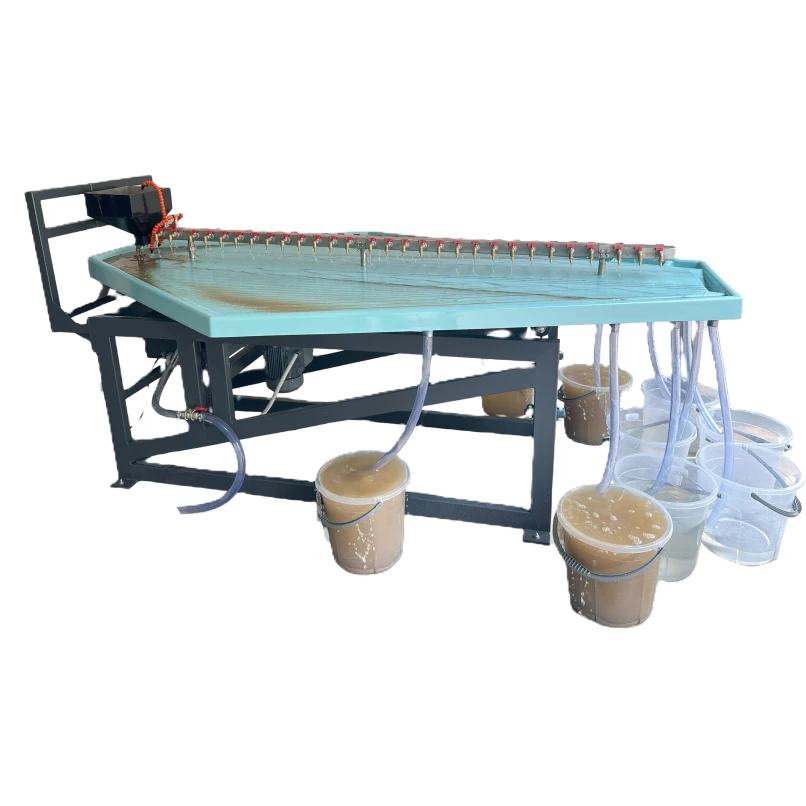
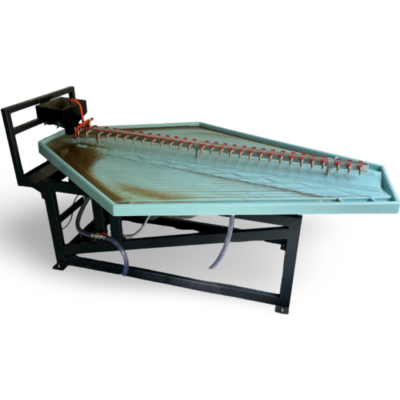
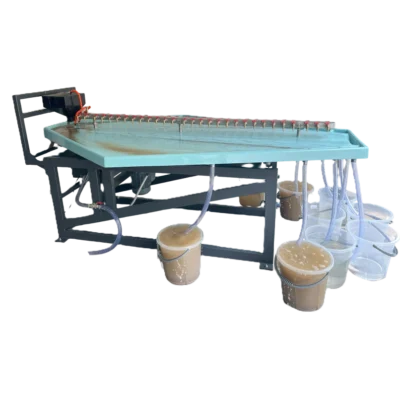
The Gemini Shaking Table is an advanced piece of equipment designed for high-capacity ore concentration processes, particularly effective in separating valuable metals like gold and platinum based on gravity and density differences.

Technical Specifications:

  • Table Dimensions: Provides a large work surface of 1750 mm x 2700 mm, allowing for efficient processing of high-volume materials.
  • Maximum Capacity: With a processing capacity of 500 kg/hour, this table is ideal for large-scale projects, delivering high efficiency and throughput.
  • Adjustable Oscillation Speed: Offers a steplessly adjustable oscillation speed ranging from 0 to 300 oscillations per minute, allowing precise control for various material types and density-based concentration processes.
  • Water Consumption: Operates at a water consumption rate of 2.2 tons per hour, which is essential for creating a consistent water film layer crucial for the separation process.
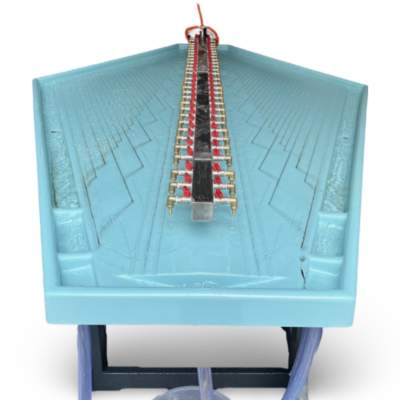
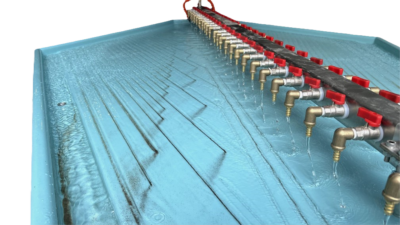
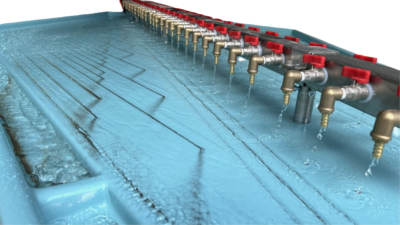
  • Water Distribution System: Equipped with a 30+30 valve water distribution system along the center axis of the table, ensuring a uniform water film across the table surface. This feature allows for precise and efficient separation of materials.

The Gemini Shaking Table provides high performance for large-scale ore concentration projects. Its precise adjustment options and durable construction ensure homogenous separation, making it an indispensable tool in valuable metal concentration applications.

TECHNICAL DATA

Application Gravity Separation, Rough Concentration, Fine Particle Recovery, Pre-Concentration, Density Separation
Capacity < 500 kg/hour
Power and Electricity 1,1 kW, 380V, 3p, 50Hz
Dimensions 2750x1750x1350mm
Weight 400kg

Application Examples

The Gemini Shaking Table is versatile and can be used in various applications, including:

  1. Gold and Precious Metal Recovery:
    • Efficiently recovers gold, silver, platinum, and other precious metals from ore, concentrates, and tailings.
  2. Mineral Processing and Testing:
    • Used in laboratories for small-scale mineral separation studies to evaluate processing methods.
  3. Fine Particle Separation:
    • Ideal for separating fine particles of heavy minerals from lighter gangue materials.
  4. Tailings Reprocessing:
    • Recovers valuable minerals from tailings, reducing environmental impact and waste.
  5. Industrial Applications:
    • Beneficiates rare earth elements, tungsten, or other high-value heavy minerals in specialized industries.

Operating Principle

The Gemini Shaking Table operates on the principle of gravity separation combined with vibration to achieve precise mineral concentration. The process involves the following steps:

  1. Feed Material Introduction:
    • Slurry containing a mixture of fine particles is fed onto the table’s inclined surface.
  2. Vibration and Flow Dynamics:
    • The table vibrates at a controlled frequency, causing materials to stratify based on their specific gravity.
    • Water flows across the table surface, assisting in the separation of particles by washing lighter materials away.
  3. Particle Separation:
    • Heavier particles (e.g., gold, heavy minerals) are trapped in the grooves of the table’s surface and move to the higher end of the table.
    • Lighter particles are carried by water and vibration to the lower end of the table, exiting as tailings.
  4. Concentrate Collection:
    • The concentrated heavy mineral fraction is collected from the discharge point at the high end of the table.
    • Tailings are discharged separately for disposal or further processing.

Key Factors for Optimal Operation:

  • Proper adjustment of the table’s vibration frequency, and water flow rate is critical to achieving effective separation.
  • Feed material should be pre-classified to the recommended particle size range for best results.

Pre-Processing Preparation

Before feeding the material onto a shaking table, particle size classification is essential to ensure efficient and accurate gravity separation. This step significantly improves the overall performance of the machine and the quality of the separated products.

Why is classification important before using a shaking table?

  • Density-Based Separation Requires Similar Particle Sizes: Shaking tables separate particles based on density differences. If the feed contains a wide range of particle sizes, size—not density—becomes the dominant factor, reducing separation efficiency.

  • Improved Separation Accuracy: When particles are of similar size, the shaking table can more effectively distinguish between heavy and light minerals, leading to higher purity in concentrate and tailings.

  • Better Stratification on the Deck: Classified materials spread evenly and form clearer separation zones on the table, enhancing performance.

  • Optimized Machine Efficiency: Properly sized feed allows the shaking table to operate with higher stability, repeatability, and capacity.

Conclusion:
For optimum results in gravity separation, it is strongly recommended to classify the sample using appropriate screening equipment prior to feeding it onto the shaking table.