
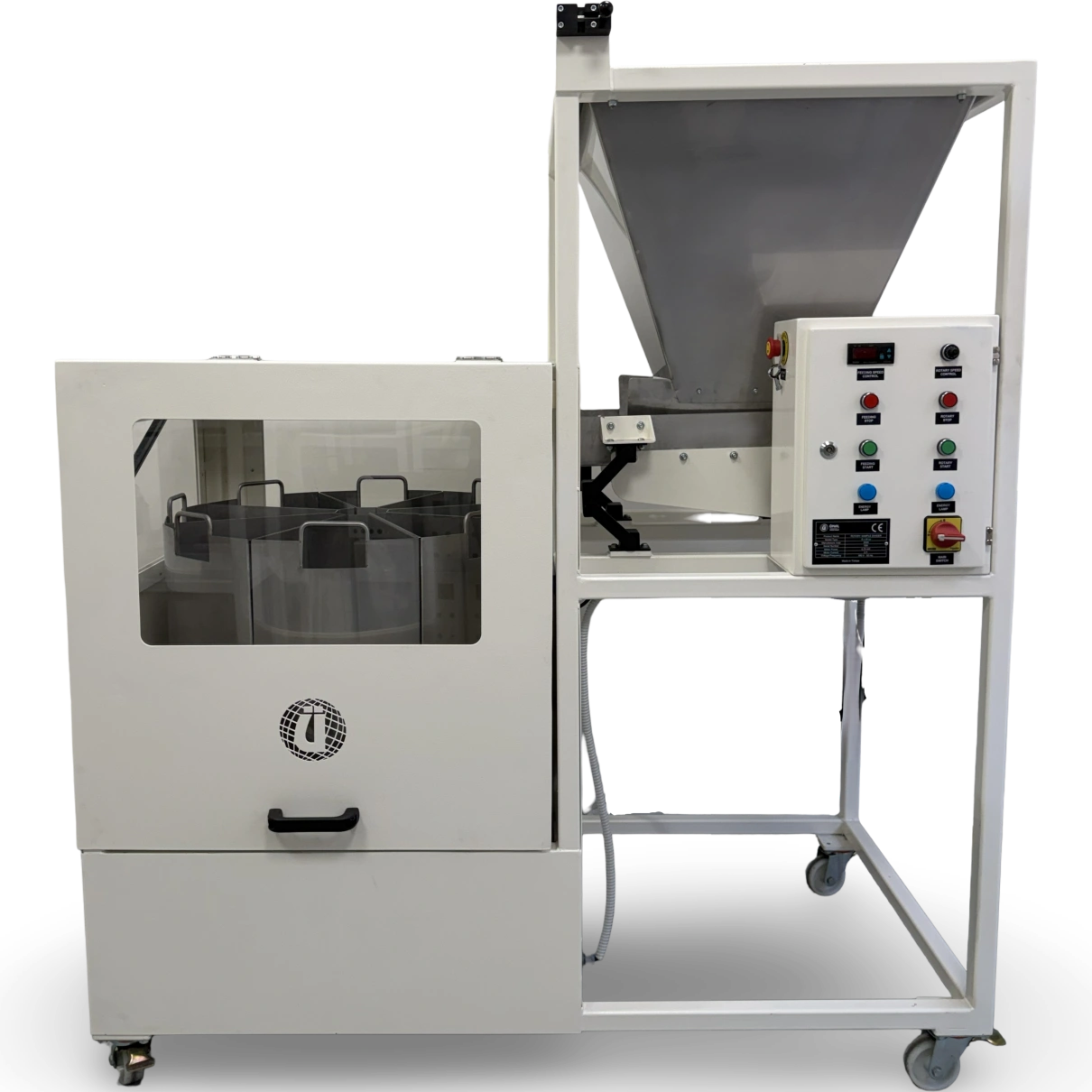
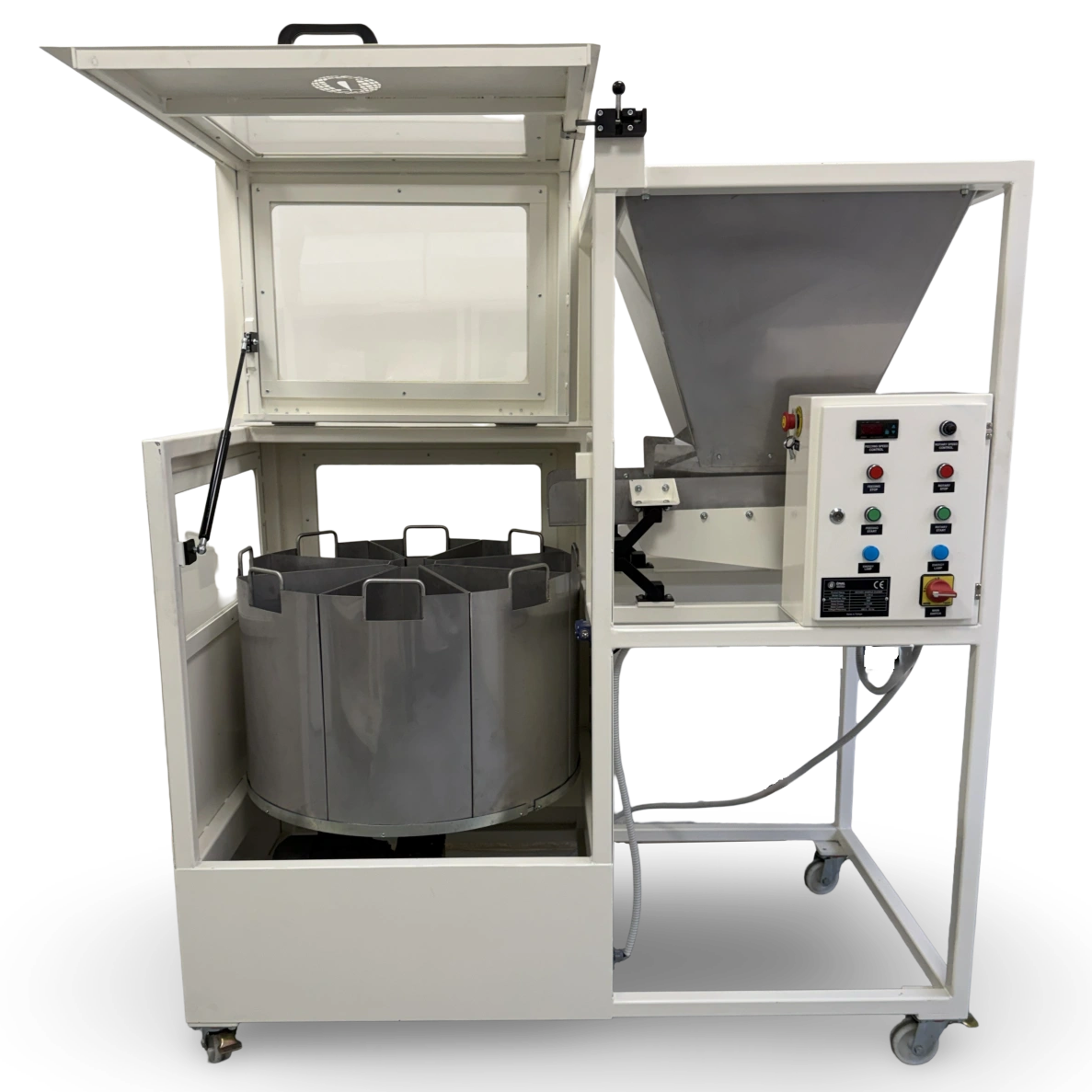
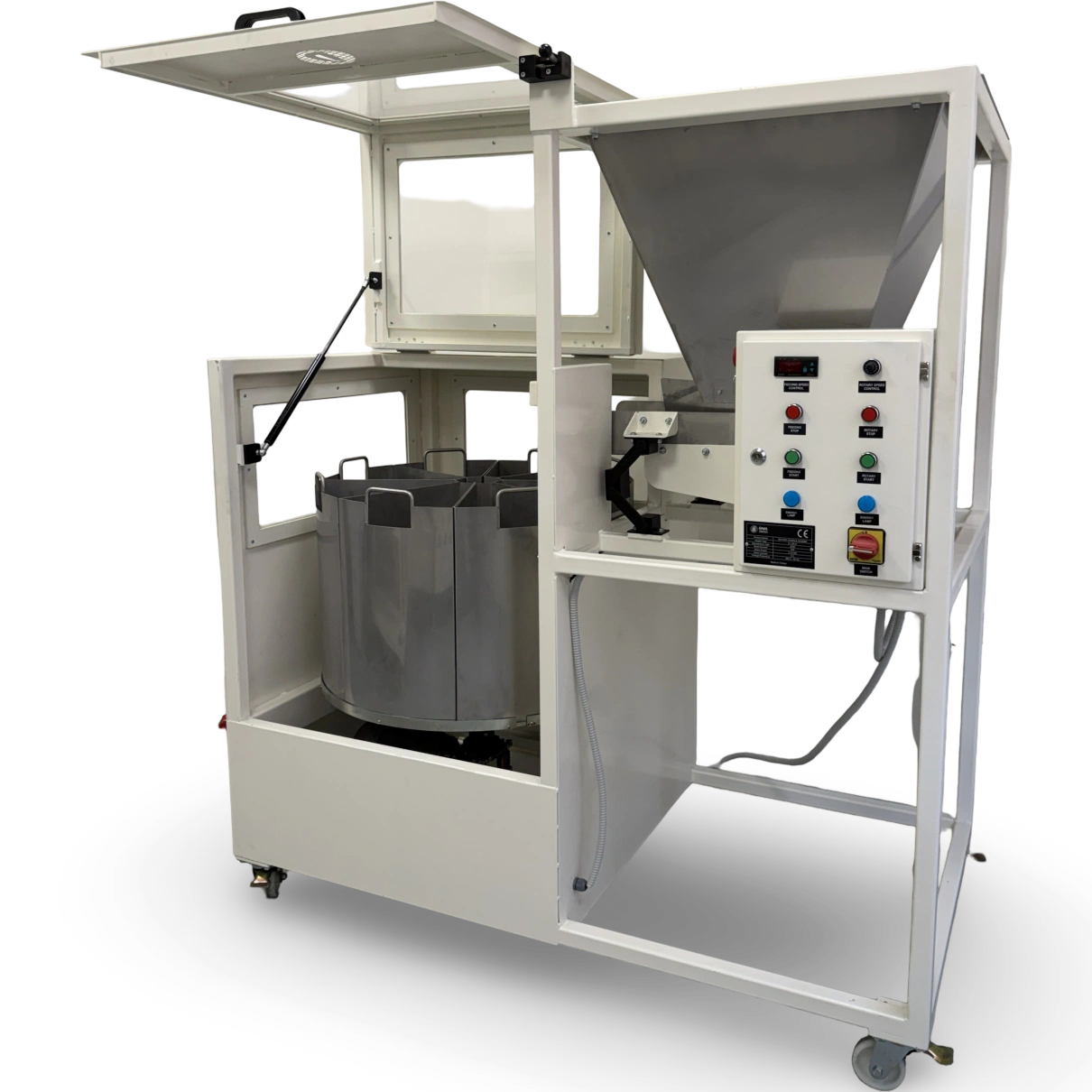
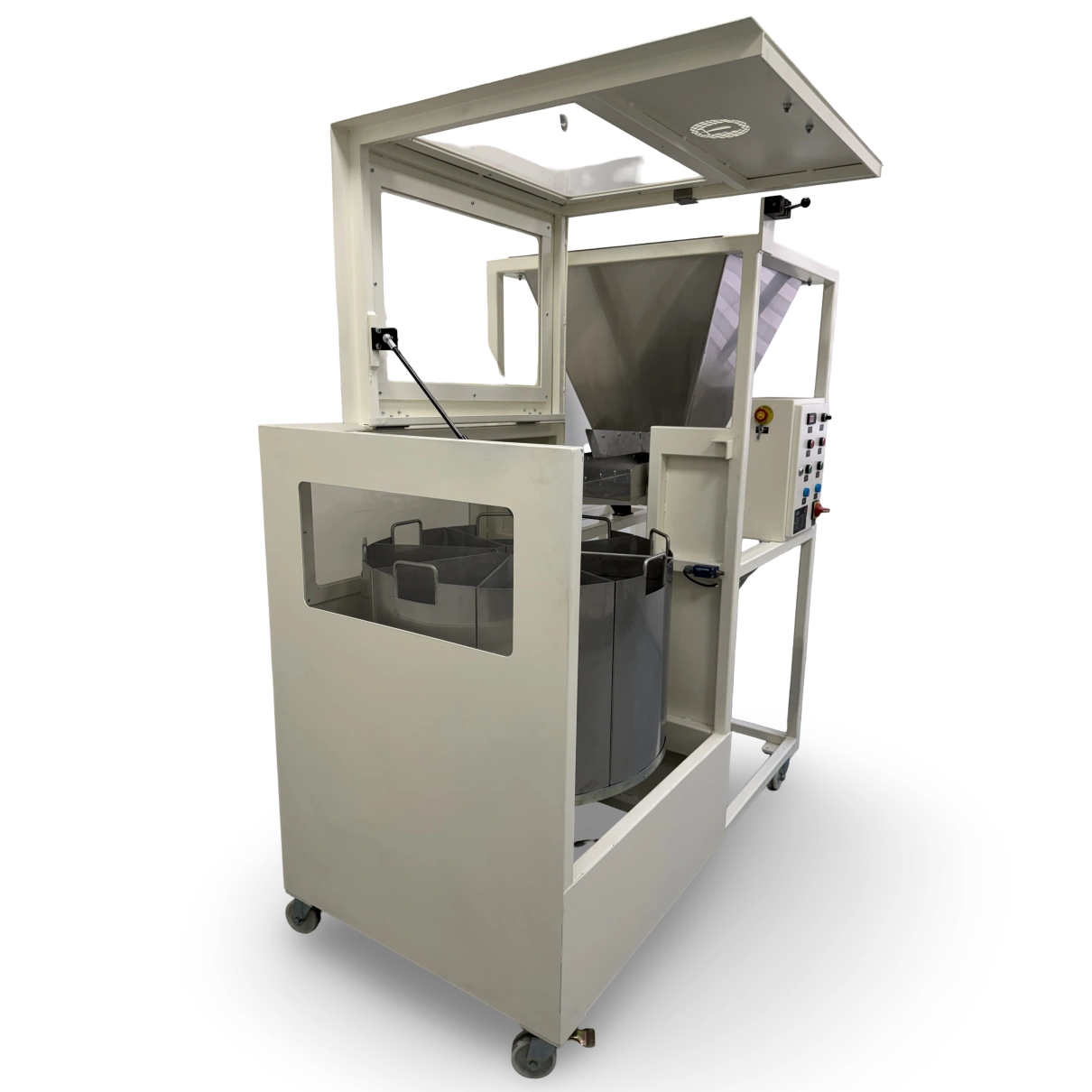
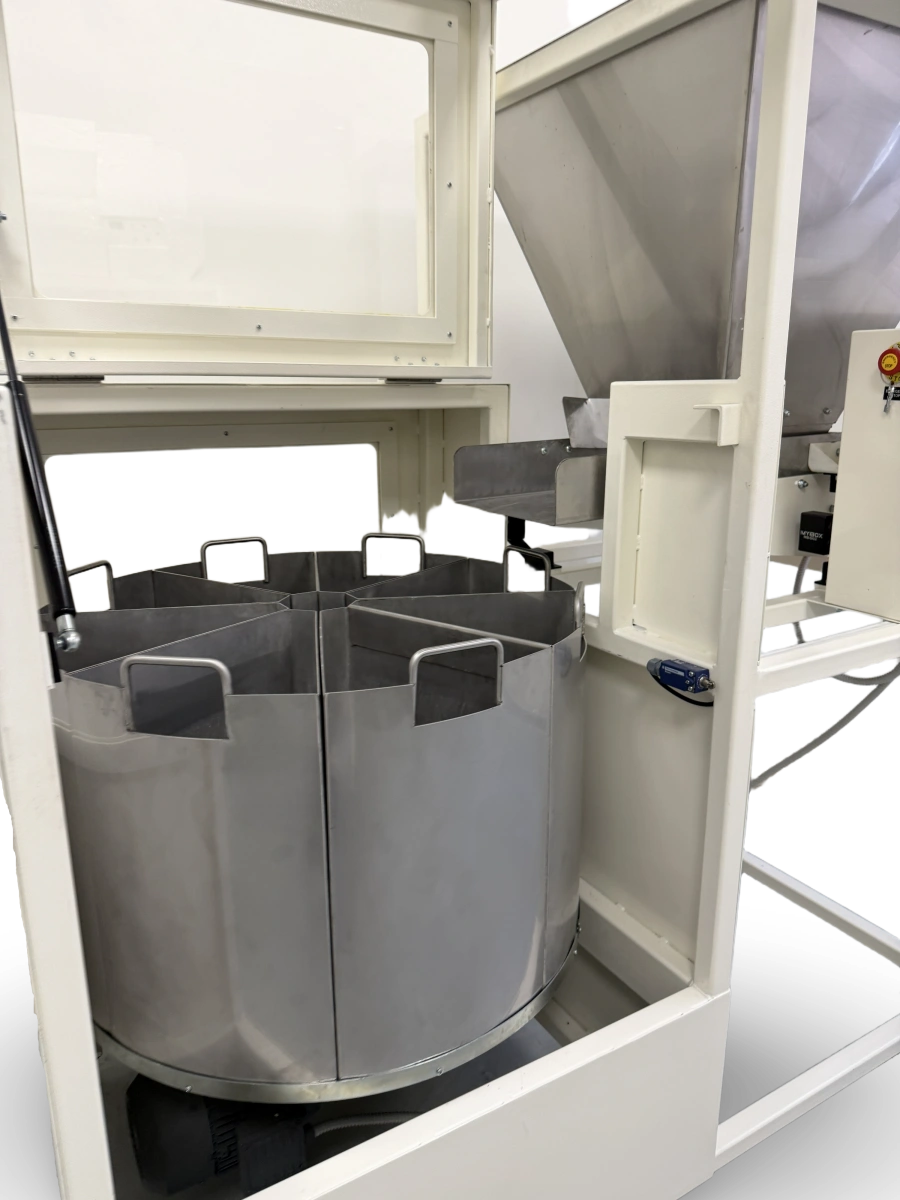
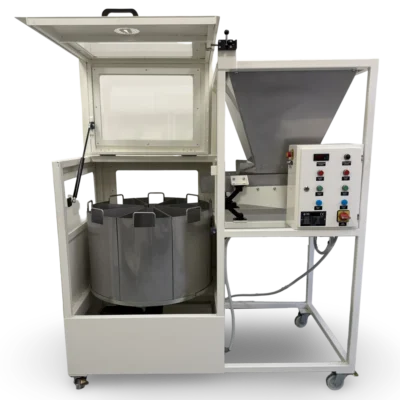
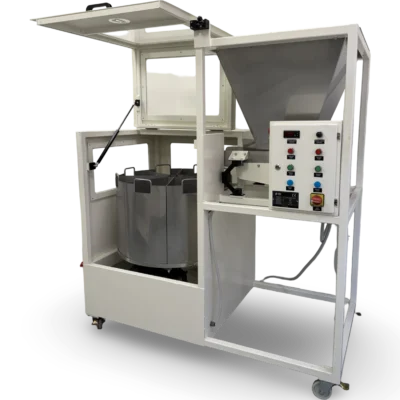
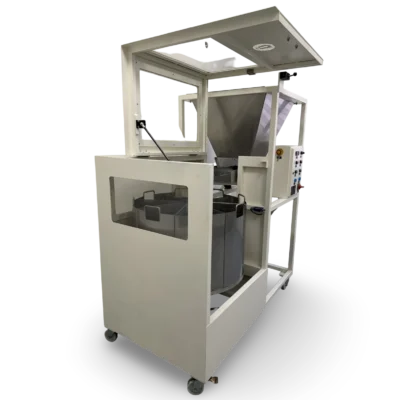
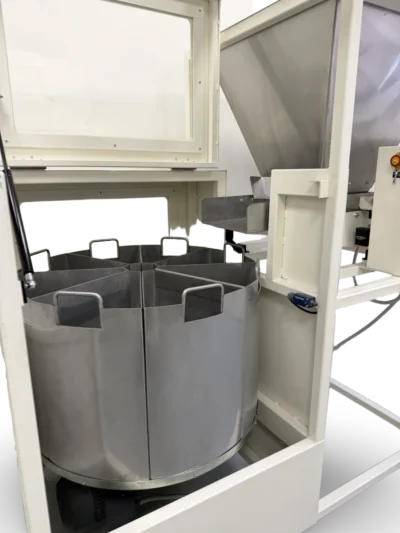
Rotary Sample Divider for bigger capacity. 8 containers and each volume 35 Liters.
Sample Dividers

Rotary Sample Divider 8×25 Liter

DESCRIPTION

The Rotary Sample Divider 8 x 25 Liters is designed for precise and efficient sample division, ensuring highly representative sub-samples for laboratory analysis. With its ±1% accuracy by weight, it guarantees that each divided portion maintains the integrity of the original sample, minimizing errors and improving reliability.

This high-capacity sample divider features eight stainless steel, triangular prism-shaped containers, each with a 25-liter capacity, making it ideal for handling large sample volumes. The homogeneous distribution system ensures even division of the material, preventing bias in analytical results. The stainless steel feeding hopper (120 L capacity) allows smooth and controlled sample flow into the rotating system.

The stepless speed adjustment (0-60 rpm) provides flexibility, allowing users to optimize the rotation speed based on material type and particle size. The machine is mounted on a four-wheeled mobile chassis for easy relocation, and the front-opening safety cage ensures secure operation.

TECHNICAL DATA

Fields of Application Mining, metallurgy, recycling and waste recovery, geology, chemistry, plastic and polymer, iron and steel, energy, biotechnology, environmental management, construction and structure, agriculture, glass and ceramics, food, geology, pharmaceuticals and medical
Application Sampling, sample preparation, sample division, sample separation
Standards CE
Feeding Size < 150mm
Speed Infinitely adjustable between 0-60 rpm
Power and Electricity 0.75kW, 380 V, 3p, 50 Hz
Compatible with various voltages.
Dimensions 107x167x184 cm
Weight 380 kg

Dividing Containers: Includes 8 stainless steel, radial (triangular prism) containers, each with a 25-liter capacity.
Feeding Hopper: Equipped with a 120-liter stainless steel feeding hopper.
Rotation Speed: The rotation speed of the containers can be smoothly adjusted from 0 to 60 rpm via an electronic speed control.
Sample Size: Capable of handling samples with particle sizes from 0 to 150 mm.
Mobile Design: Mounted on a four-wheeled mobile chassis with a front-opening safety cage for secure operation.

The lid safety switch prevents operation when the lid is open, ensuring maximum operator safety by avoiding potential accidents. The motor will not engage, and the operation cannot start until the lid is securely closed.

An emergency stop button is also included, providing immediate shutdown if needed. These features are essential for both operator safety and the safe operation of the machine.

The Rotary Sample Divider 8×25 Liters comes with 8 stainless steel, 25-liter containers as standard. As seen in the video, a fixed container version with bottom discharge is also available for more efficient sample handling.

APPLICATION AREAS

Our Rotary Sample Dividers are suitable for sampling a wide range of materials. Some uses include:

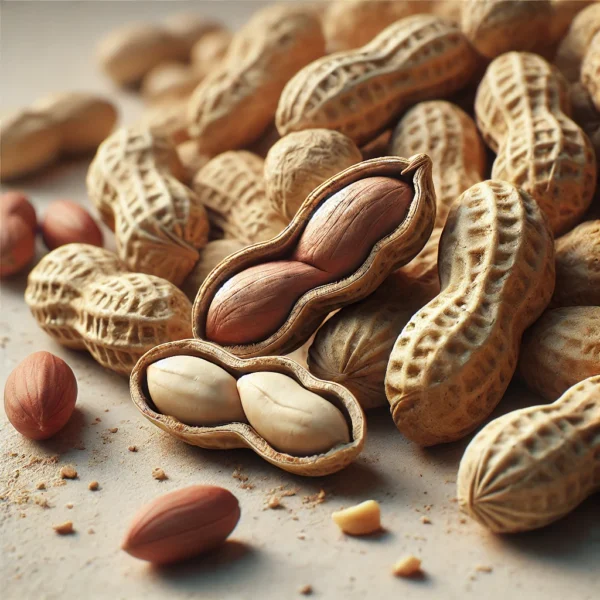
Mineral ores (copper, iron, gold, chrome ores), coffee, peanuts, hazelnuts, coal, concrete, ceramics, quartz, corundum, granite, slag and cement clinker, some industrial wastes, etc.

WORKING PRINCIPLE

Rotary Sample Dividers are designed to achieve high-precision sample division during sample preparation processes. These devices ensure that each sub-sample accurately represents the main sample by dividing the material homogeneously.

The operating principle of the rotary sample divider begins with transferring the sample to the device’s hopper. The sample is evenly distributed by a rotating distributor and directed into pre-determined compartments. As the sample hopper rotates, the material is divided in fixed ratios and directed into the sample containers. This rotary motion enables uniform distribution and precise division of the sample.

Since the sampling process is carried out automatically, errors due to human factors are minimized. Although sample collection may seem straightforward, it is the most critical step for accurate analysis results. The automated system ensures a reliable, repeatable, and precise sampling process.